What Is Meta Ads Lead Generation?
Meta Ads lead generation uses Facebook and Instagram to start useful conversations with people who may be interested in a business. Instead of treating an impression or a click as the end result, the campaign is designed to collect an enquiry that a team can contact and qualify.
Indian businesses can capture enquiries through Meta Instant Forms, WhatsApp, website forms, phone calls, appointment requests or consultation bookings. The best route depends on what the prospect needs to decide, how quickly the business can respond and how much information is required before a sales conversation.
Define What a Qualified Lead Means
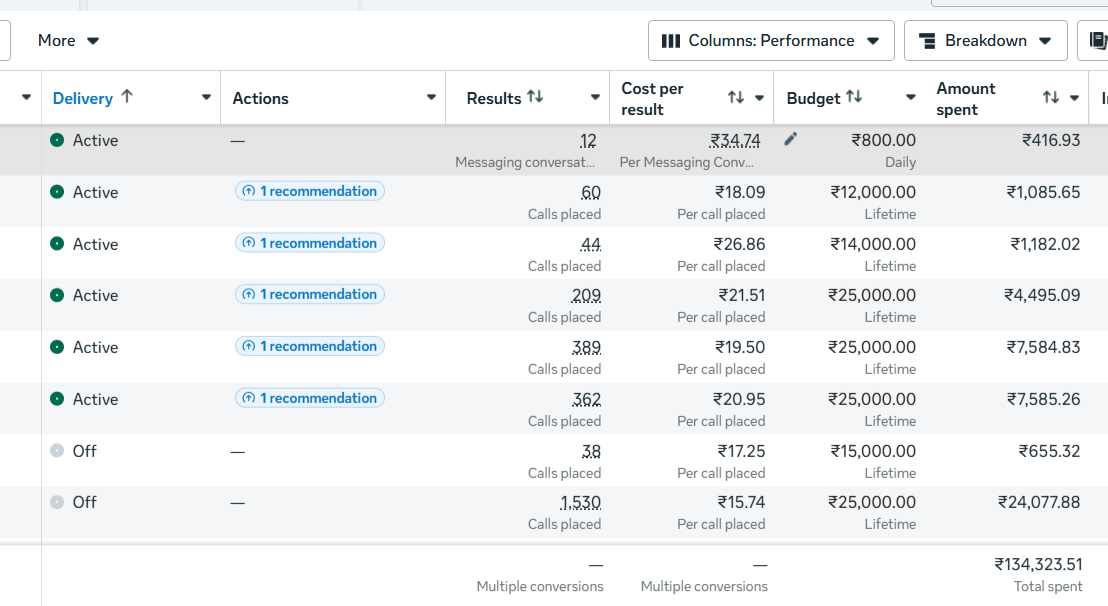
A qualified lead is not the same as the cheapest lead. A gym may value a person living within a few kilometres who wants a trial this week. An Ayurvedic clinic may need someone with a relevant concern who is open to a consultation. A healthcare clinic may prioritise an appointment-ready local patient; an education institute may need a student or parent interested in a specific course.
For real estate, qualification can include project preference, budget and site-visit timing. For manufacturing and B2B, it may include product requirement, purchase volume, city, company type or distributor status. Define this with the sales team before launch, then track qualified opportunities alongside lead volume.
Choose the Right Lead-Capture Method
Meta Instant Forms
Instant Forms open inside Facebook or Instagram and reduce friction because people do not leave the app. They are useful for enquiry collection at scale, but should include a few thoughtful questions and a clear next step so the business does not optimise only for easy submissions.
Click-to-WhatsApp Ads
WhatsApp ads are useful when a prompt conversation helps qualification. They work especially well for consultations, local services and catalogue-led enquiries. The limitation is operational: someone must respond quickly with a helpful first message, not a generic delayed reply.
Website or Landing-Page Forms
A landing page gives more space to explain a service, show proof and pre-qualify a prospect. It is valuable for considered decisions, but page speed, mobile readability and form design directly affect conversion quality.
Phone Call Enquiries
Calls can work for urgent or high-intent requirements such as clinics, property visits or local services. Use clear call hours and ensure missed calls receive a prompt callback or WhatsApp confirmation.
Build the Campaign Around the Business Goal
Meta campaigns are built in three connected layers: Campaign → Ad Set → Ads. The campaign defines the objective. The ad set controls audience, location, budget, placements and optimisation. The ads contain the creative, message, offer and lead destination.
For example, a local clinic might optimise for appointment enquiries within a defined service area, while a manufacturer might focus on dealer or buyer enquiries across selected states. This keeps the creative and qualification questions aligned with the actual sales process.
Create an Offer People Can Understand Quickly
People should understand the next action in seconds. A generic line such as “Contact us today” usually gives less context than a clear, relevant offer: book a consultation, claim a trial, request a demo, schedule an appointment, plan a site visit, get course counselling, receive a product catalogue or request a price estimate.
An action-driven offer tells the prospect what will happen after submitting details. It also helps the team create a more focused follow-up message and makes lead quality easier to review.
Use Creatives That Explain, Not Just Decorate
A strong ad creative gives a prospect a reason to pause and a clear next action. Use an opening hook that names a real question or problem, then explain the service, offer or outcome in simple language. Videos can demonstrate a process; static poster ads can make a focused offer easy to scan.
Useful concepts include customer-problem creatives, service-explanation creatives, testimonial-led messages, price-estimate prompts and AI-assisted videos that explain a service clearly. Test different concepts and CTA angles, not only slightly different colours or layouts of the same idea.
Build a Form That Balances Volume and Quality
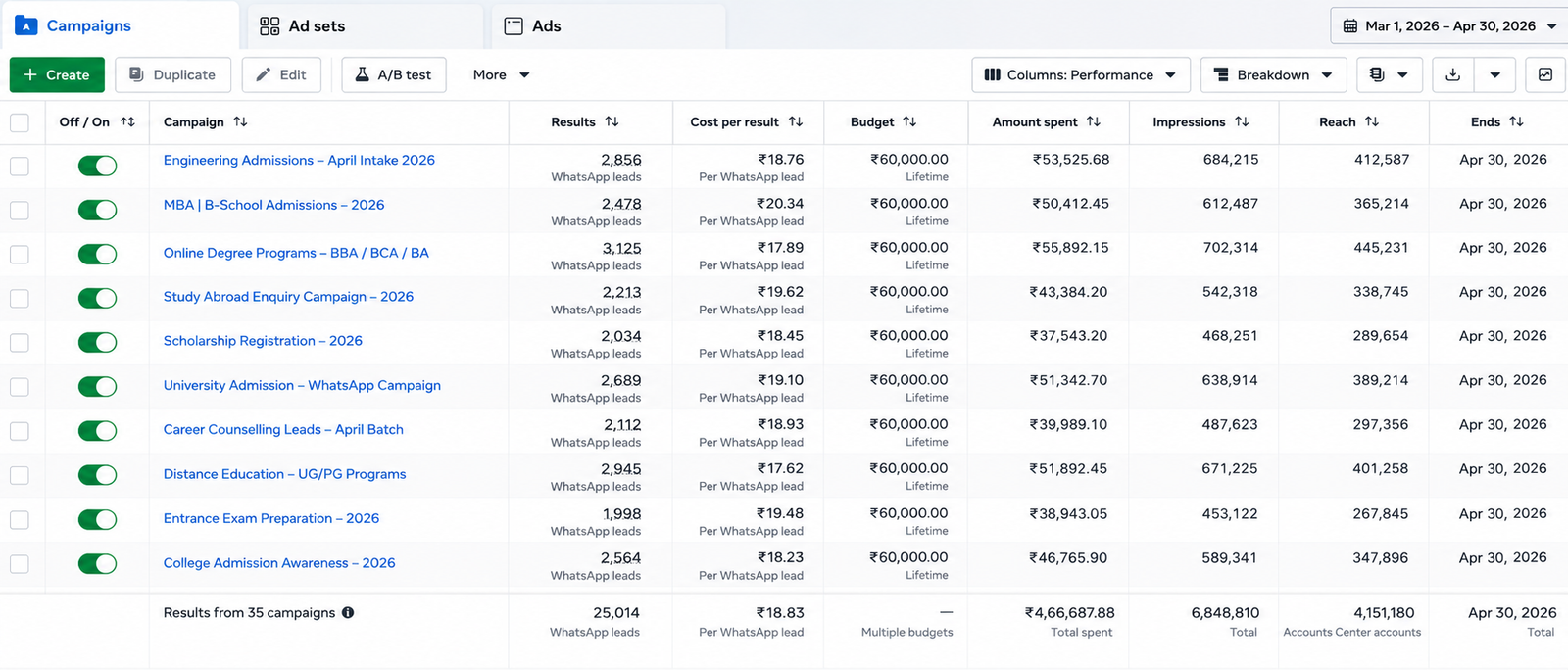
Use form questions only when the answer will improve the next conversation. Depending on the business, useful fields can include service required, location, timeline, budget range, business or personal requirement and preferred contact time.
A form that is too simple may generate low-context enquiries; one that is too long can discourage genuine prospects. Start with the minimum information needed for a useful first follow-up, then review the outcome with the sales team.
Follow-Up Is Part of the Campaign
The campaign does not end at form submission. A quick confirmation, a relevant WhatsApp message or a helpful call often determines whether a lead becomes a meaningful conversation.
Install Proper Tracking
Tracking makes it possible to connect advertising activity with genuine business outcomes. Use the Meta Pixel and Conversions API where relevant, add UTM parameters to website links, and connect lead data to a CRM or structured lead sheet. Track whether a lead was contacted, qualified, booked and ultimately converted.
For businesses with appointments or longer sales cycles, appointment and revenue attribution are more useful than a single platform metric. The goal is not perfect attribution; it is a consistent view that helps the team see which campaigns contribute to real opportunities.
Measure More Than Cost per Lead
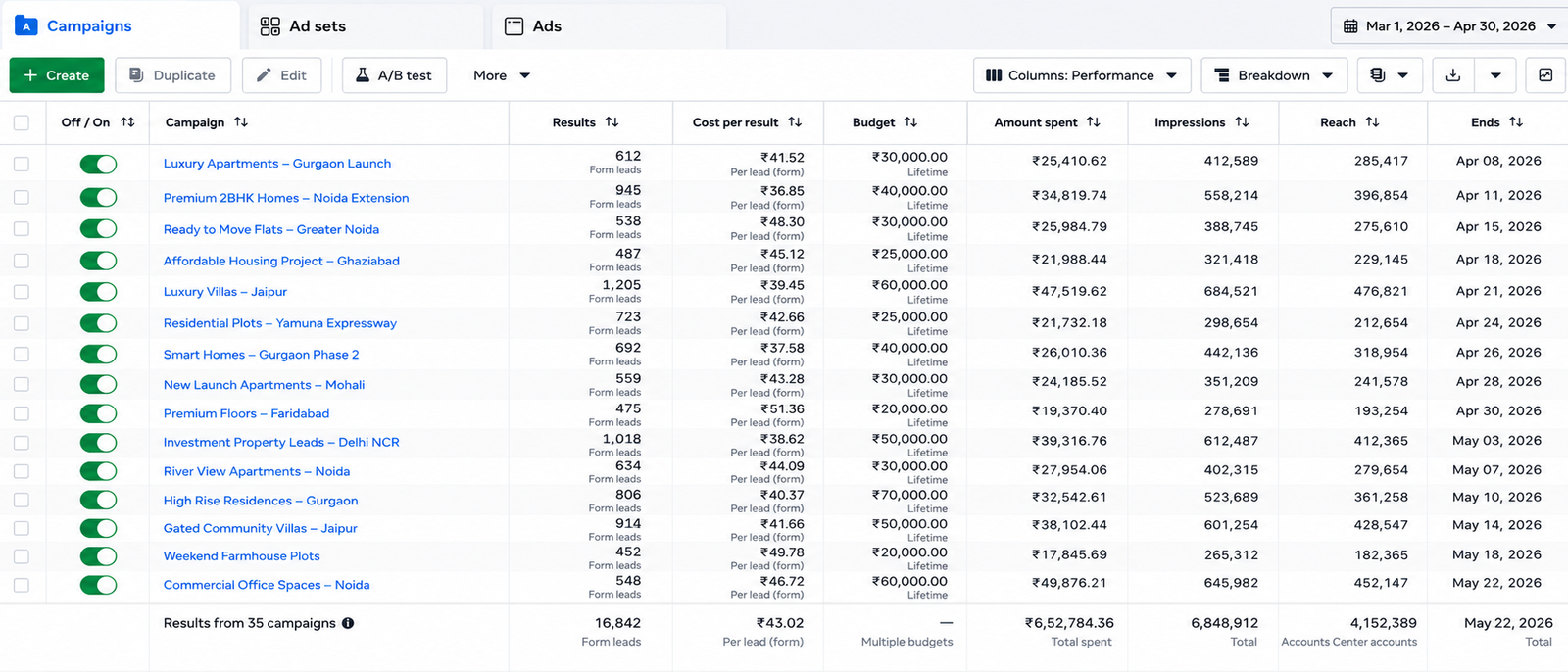
Cost per lead matters, but it does not show whether leads are useful. Review it with qualified lead rate, cost per qualified lead, contact rate, appointment rate, customer acquisition cost and, where revenue is available, ROAS.
Qualified Lead Rate
Qualified Leads ÷ Total Leads × 100

Cost per Qualified Lead
Ad Spend ÷ Qualified Leads

Contact Rate
Leads Contacted ÷ Total Leads × 100Campaign A delivers 100 leads at ₹200 CPL, but only 5 are qualified. Campaign B delivers 50 leads at ₹300 CPL, but 20 are qualified. Campaign B costs more per enquiry, yet it may create far more sales opportunities and a lower cost per qualified lead.
Use a Consistent Optimization Routine
Daily checks
Check delivery, spend pacing, lead notifications, broken links, form delivery and whether the team is responding. Do not make major changes because of a few hours of data.
Weekly review
Compare creative concepts, audiences, placements, cost per qualified lead and contact outcomes. Review call or WhatsApp feedback to identify repeated concerns, unsuitable locations or unclear offers.
Monthly review
Look for patterns across campaigns: which offers create appointments, which creative themes attract the right audience and where budget should be retained, reduced or tested further.
How Much Budget Should an Indian Business Start With?
There is no universal starting budget. Costs vary by industry, location, offer, competition, audience size, creative quality and sales process. A useful planning method is to estimate how many leads are needed before a campaign can be reviewed sensibly.
Expected CPL
₹500

Evaluation Leads
20

Estimated Test Budget
₹500 × 20 = ₹10,000
This is not a guaranteed result. It is a way to set a starting test budget that can produce enough information for a thoughtful review.
Common Meta Ads Lead-Generation Mistakes
- Optimising only for cheap clicks or form submissions.
- Using a generic offer with no clear action.
- Collecting no useful qualification information, or asking too many questions.
- Running one creative concept only.
- Sending traffic to a slow or unclear landing page.
- Following up late or without context.
- Looking only at CPL and ignoring sales outcomes.
- Changing campaigns too frequently before enough data is available.
- Making unsupported claims in ad copy or creative.
Strategies for Different Industries
Ayurvedic & Wellness
Lead with a consultation, clear service explanation and location-aware follow-up. Avoid exaggerated health claims.
Healthcare Clinics
Focus on appointment enquiries, service relevance and quick confirmation from the clinic team.
Gyms & Fitness
Promote a local trial, consultation or membership discussion and qualify by area and goal.
Education & Coaching
Match the campaign to a course, batch or counselling need; capture student or parent context.
Real Estate
Use project-specific ads, site-visit CTAs and questions around location, budget and timeline.
Manufacturing & B2B
Show the product or capability, then qualify for order type, city, business role and volume.
A Simple 30-Day Meta Ads Lead-Generation Plan
Week 1 — Foundation
Define qualified lead criteria, offer, destination, tracking and first creative concepts.
Week 2 — Launch
Launch a focused structure, confirm lead delivery and ensure follow-up is working.
Week 3 — Quality Review
Review contacted and qualified outcomes with the sales team, not just platform data.
Week 4 — Optimization
Retain stronger concepts, test clear alternatives and plan the next month from evidence.
Final Takeaway
Successful Meta Ads lead generation is a connected system: audience, offer, creative, lead capture, follow-up, tracking and optimisation. Improving one stage can help, but the strongest results usually come from reviewing the full journey together. Businesses that measure qualified opportunities and keep a consistent testing routine can make more informed decisions without promising a guaranteed outcome.
LET’S TALK
Planning a Meta Ads Lead-Generation Campaign?
DigiflyX helps businesses plan Meta Ads campaigns, WhatsApp lead funnels, creative testing, reporting and ongoing optimization based on their business category and goals.
Campaign results and cost per lead vary by business type, location, offer, competition, budget and sales process.
Frequently Asked Questions
Are Meta Ads effective for lead generation in India?
They can be effective when the audience, offer, lead capture method and follow-up process suit the business. Results vary by category, location, competition, budget and sales readiness.
Should I use Instant Forms or WhatsApp?
Use Instant Forms when easy in-platform enquiry capture suits the campaign. Use WhatsApp when a fast two-way conversation helps qualify a person. Many businesses test both with separate reporting.
What is a good cost per lead?
There is no universal good CPL. The more useful question is whether the cost produces qualified leads, appointments and customers at a sustainable cost.
How quickly should leads be contacted?
Contact them as quickly as the business can do so helpfully and consistently. A prompt confirmation with relevant context is usually better than a delayed generic message.
Should I use broad or interest-based targeting?
Both can be tested. The right choice depends on the market, creative, location and available conversion feedback. Compare quality outcomes rather than assuming one method always wins.
How often should Meta Ads creatives be changed?
Change them when performance, frequency, feedback or the offer indicates a genuine need. Test new concepts regularly rather than replacing ads for minor cosmetic variations.