Effective healthcare lead generation connects a service a clinic can genuinely provide with the right local audience, useful education, a low-friction enquiry route and organised follow-up. The clinic then measures contactability, relevance and appointment intent. A lead is the start of a possible conversation; it is not automatically a qualified lead, appointment or patient.
What Is Healthcare Lead Generation?
Healthcare lead generation is the process of helping an interested person discover a doctor, clinic or healthcare service and take a measurable next step, such as requesting information, starting a WhatsApp conversation or asking for an appointment. A lead exists when the clinic has a valid way to follow up. A qualified healthcare lead also matches practical criteria such as service interest, location and willingness to discuss an appointment.
Appointment intent is stronger than casual curiosity, but it is still not a completed consultation. The clinic must confirm relevance, availability and its own intake requirements. The journey can begin with paid advertising, search visibility, educational content, a referral or local discovery.
This is a planning funnel, not a guaranteed conversion sequence. People can leave at any stage, and appropriate medical decisions remain with qualified healthcare professionals.
Why Lead Generation Is Difficult for Doctors and Clinics
Healthcare decisions require trust. People may compare specialists, clinic locations, consultation formats, costs, availability and verified practitioner information before contacting anyone. Local competition makes that comparison easier, while higher-cost or specialised services often involve a longer decision process.
Campaign problems commonly begin with an unclear offer, generic advertising or no meaningful difference between the clinic and every alternative. A stock image and “Contact us today” provide little context. Weak landing pages compound the problem when they load slowly on mobile, hide location or appointment details, or send every service to the same generic homepage.
Lead quality can also fail after submission. Slow follow-up, unanswered calls, no WhatsApp context, inconsistent qualification and no lead-status tracking can make a promising campaign look ineffective. Without connecting ad data to qualified conversations and appointments, the clinic cannot tell whether the issue is targeting, creative, lead capture or operations.
What Makes a Healthcare Lead Qualified?
A qualified healthcare lead is a contactable enquiry that fits the clinic’s written practical criteria and is willing to consider a relevant next step. Useful signals include interest in a service the clinic offers, a suitable city or catchment area, the correct branch, realistic appointment intent, valid contact details, a preferred consultation time and willingness to speak with clinic staff.
| Stage | Practical meaning | Important distinction |
|---|---|---|
| Lead | A person submits details or starts a direct conversation. | A submission alone does not confirm relevance or intent. |
| Qualified lead | The enquiry meets agreed service, location, contactability and next-step criteria. | Qualification is not a medical assessment. |
| Appointment | A suitable consultation slot is selected or confirmed. | A booking does not guarantee attendance. |
| Patient or customer | The clinic completes its appropriate intake and service process. | Advertising cannot guarantee this outcome. |
Ask only for information required to route and respond to the enquiry. Detailed symptoms, diagnoses, medical history and other sensitive information generally belong in an appropriate secure clinical intake process—not an advertising lead form.
Best Lead Generation Channels for Doctors and Clinics
No channel is universally best. Meta Ads can create awareness and demand, while search can capture people already looking for a service. Local discovery, content and referrals build trust around both. The right mix depends on the service, geography, demand, clinic capacity and how people prefer to contact the practice.
| Channel | Best Use Case | Main Strength | Main Limitation |
|---|---|---|---|
| Meta Ads | Local awareness, education and consultation enquiries | Facebook and Instagram reach with creative testing and multiple lead routes | Needs responsible messaging, qualification and active optimization |
| Google Search | People actively searching for a doctor, clinic or service | Captures existing intent | Competition and click costs can be high for some searches |
| Google Business Profile / Local Search | Nearby discovery, directions and calls | Strong local context and practical clinic information | Visibility depends on relevance, profile quality and local competition |
| Short pre-appointment conversations | Familiar, direct communication | Requires prompt human ownership and privacy-aware handling | |
| Landing Pages | Services needing explanation before an enquiry | Control over message, trust information and tracking | Poor mobile speed or weak copy reduces completion |
| Referral / Organic Content | Long-term trust and education | Can support credibility across the patient journey | Usually takes sustained effort and may be less predictable |
Why Meta Ads Can Work for Healthcare Businesses
Meta Ads can introduce a clinic through Facebook and Instagram before someone performs an active search. Geographic targeting can focus delivery around serviceable areas. Educational videos, practitioner introductions, clinic walkthroughs and consultation-process content can answer early questions and build familiarity without diagnosing the viewer.
Campaigns can send eligible prospects to an Instant Form, WhatsApp, a phone call, landing page or booking route. Retargeting can reconnect with appropriate website visitors, video viewers and social engagers, subject to platform and privacy requirements. That makes Meta useful for awareness, consideration and consultation-focused campaigns, but it does not guarantee return on investment.
The broader Meta Ads lead-generation guide for Indian businesses explains how objectives, audiences, creative and lead routes work together.
Step-by-Step Meta Ads Strategy for Doctors and Clinics
Step 1: Choose the Right Service to Promote
Give each campaign one clear primary service or consultation goal. Generic “all treatments” advertising forces the prospect to interpret too much and makes lead feedback difficult to analyse. Depending on what the clinic genuinely provides, a campaign might focus on a dental consultation, physiotherapy consultation, skin or hair consultation, preventive health consultation, diagnostic booking, specialty consultation or wellness consultation.
Explain the next step, location or format and any essential eligibility information. Use factual service language. Avoid unsupported outcome claims, cure promises and statements that replace clinical assessment.
Step 2: Define the Correct Geographic Audience
Start with the city, branch locations, nearby areas and travel distance that patients realistically accept. A routine local service may need a compact radius; a specialist or diagnostic centre may have a wider catchment area. There is no single correct distance for every clinic.
Review where qualified leads and appointments actually come from. Separate branches where staff, hours or services differ, and make the intended location visible in the ad. A cheap enquiry outside a practical service area is rarely useful.
Step 3: Build Trust-Focused Healthcare Creatives
Useful concepts include a verified doctor or practitioner introduction, a clinic tour, consultation-process explanation, FAQ video, service education, appointment walkthrough, infrastructure overview and educational reel. Practitioner expertise should be stated only when factually verified. Patient experiences or testimonials should be used only when lawful, appropriately consented and permitted by current platform rules.
Avoid fear tactics, exaggerated health claims, guaranteed results, misleading before-and-after presentations, fabricated reviews, fake doctors and invented credentials. The copy should discuss the service without implying that the advertiser knows the viewer has a sensitive medical condition. DigiflyX’s existing AI-assisted video service can support creative production, but healthcare accuracy and approval still require human oversight.
Step 4: Choose the Right Lead Destination
The destination should fit the clinic’s information needs and response capacity. Fewer clicks help only when the resulting enquiry can be handled well.
| Lead Destination | Best For | Advantage | Potential Limitation |
|---|---|---|---|
| Meta Instant Form | Structured appointment enquiries with a few fields | Fast in-platform completion | Very low friction can attract casual or inaccurate submissions |
| Clinics where a short conversation guides the next step | Direct and familiar communication | Needs consistent, timely and privacy-aware follow-up | |
| Phone Call | Higher-intent enquiries during staffed hours | Questions can be clarified immediately | Missed calls and poor handover waste demand |
| Landing Page | Services that require context and trust information | More control over explanation and measurement | Speed, mobile usability and message match affect conversion |
| Appointment Booking Page | Clinics with reliable real-time availability | Creates a direct scheduling action | Unsuitable slots or a complicated system can create drop-off |
Compare routes using qualified leads and appointment outcomes, not just form completion cost. For conversation design, read the Meta Ads to WhatsApp leads guide.
Step 5: Use Smart Qualification Questions
Useful fields may include name, city, preferred clinic branch, service of interest, preferred appointment time and preferred contact method. If online and in-person consultations are both genuinely available, that preference can help route the enquiry.
Keep questions proportionate and explain how the information will be used. Do not request diagnosis details, detailed symptoms or medical history merely to improve marketing reports. The clinic should move sensitive information into an appropriate secure process when it is actually needed.
Step 6: Build a Fast Follow-Up System
Follow-up quality affects whether a relevant lead becomes an appointment opportunity. Send an immediate acknowledgement where practical, assign a responsible team member, make a contextual WhatsApp or phone response, offer suitable appointment slots and record the result. There is no honest universal response-time guarantee, but ownership and consistency matter.
Use appropriate reminders and repeated follow-up attempts without spamming. A CRM or maintained spreadsheet can track New, Contacted, Qualified, Appointment Offered, Booked, No Response and Not Relevant. Respect requests to stop contact and protect access to enquiry data.
Step 7: Retarget Interested Audiences
Where permitted, retarget eligible website visitors, landing-page visitors, Instagram or Facebook engagers and video viewers with a useful next message. A viewer who watched a clinic introduction might next see an appointment-process FAQ rather than the identical ad repeatedly.
Use exclusions and frequency review where appropriate. Retargeting should never reveal or imply sensitive health information, and all audience use must follow current platform rules, privacy requirements and the clinic’s lawful data practices.
Healthcare Lead Generation Funnel
A scan-friendly funnel gives the campaign team and clinic staff shared stages to track. Each stage needs a clear owner and next action.
Introduces a real service and appropriate consultation action.↓ Lead Form / Landing Page / WhatsApp
Captures only the information needed for follow-up.↓ Qualification
Confirms service, location, contactability and appointment intent.↓ Call / WhatsApp Conversation
Clinic staff answer practical questions and guide the next step.↓ Appointment Booking↓ Consultation
An appointment or consultation is not the same as a guaranteed patient or customer. The clinic’s professional assessment, intake and service process remain separate from marketing.
Types of Healthcare Ads That Can Generate Better Enquiries
Better healthcare ads reduce uncertainty without diagnosing the audience. Useful concepts include:
People and environment
Verified doctor introductions, clinic walkthroughs, infrastructure, branch convenience and a clear appointment process.
Education and FAQs
Service explanations, common questions, myth-versus-fact content and treatment-process education reviewed for accuracy.
Consultation invitations
Transparent calls to request availability, select a branch or ask about an appropriate consultation format.
Short-form video
Educational reels, practitioner-led videos and simple process explainers designed for mobile viewing.
Appointment availability may be promoted when accurate. Do not use ad copy that declares a viewer has a condition, shames them, or creates fear to force a response.
Common Healthcare Meta Ads Mistakes
- Targeting too broadly: enquiries arrive from locations or audiences the clinic cannot serve.
- Optimizing only for the cheapest CPL: low submission cost hides poor relevance and contactability.
- Poor qualification: the team cannot separate casual questions from appointment intent.
- Weak follow-up: nobody owns new leads, missed calls or reminders.
- Generic stock imagery: the ad gives no real clinic, practitioner or process context.
- Sending traffic to a generic homepage: the specific service message disappears after the click.
- Misleading claims: cure promises and guaranteed outcomes create trust and compliance risks.
- Excessive urgency: pressure-based language is inappropriate for considered healthcare decisions.
- No tracking: marketing sees leads but not qualified conversations or appointments.
- No retargeting plan: eligible interested people receive no useful follow-up message.
- Poor mobile experience: slow pages and difficult forms lose people after a strong ad.
- No lead management process: statuses and responsibilities change between team members.
- Fabricated testimonials: invented experiences damage credibility and may breach rules.
- Ignoring healthcare advertising rules: copy, creative, targeting and destinations go live without review.
Cheap Leads vs Qualified Leads
A campaign with the lowest cost per lead is not necessarily the best campaign. CPL divides spend by every submission, including people outside the area, unreachable contacts and enquiries for the wrong service. Cost per qualified lead counts only enquiries that meet the clinic’s agreed criteria.
Review contact rate, qualified-lead rate, appointment booking rate, show-up rate, appointment cost and downstream conversion only where it can be tracked appropriately. A campaign with fewer, more relevant leads may create better appointment opportunities than one producing a high volume of inexpensive forms.
How to Measure Healthcare Lead Generation
Use simple definitions that reception, marketing and clinic leadership apply consistently.
Leads
All enquiries captured through forms, calls, WhatsApp or a booking route.
Qualified Leads
Enquiries meeting the agreed service, location, contactability and intent criteria.
Cost per Lead
Ad spend ÷ total leads.
Cost per Qualified Lead
Ad spend ÷ qualified leads.
Contact Rate
Leads reached ÷ total leads × 100.
Appointment Booking Rate
Booked appointments ÷ qualified leads × 100.
Appointment Show Rate
Attended appointments ÷ booked appointments × 100.
Cost per Appointment
Ad spend ÷ booked appointments.
Lead-to-Appointment Rate
Booked appointments ÷ total leads × 100.
Interpret metrics with service type, geography, competition, consultation value, campaign maturity and follow-up capacity. Do not compare a specialist clinic with a local diagnostic booking route using a made-up universal benchmark. Review disqualification reasons and missed-contact patterns so the next optimization addresses the actual bottleneck.
Example Healthcare Campaign Framework
| Element | Example decision |
|---|---|
| Service | Request a physiotherapy consultation |
| Audience | Adults for whom the service is relevant, without sensitive-condition assumptions |
| Geography | Serviceable radius around one clinic branch |
| Creative | Verified practitioner explains the first consultation process |
| Campaign objective | Generate consultation enquiries |
| Lead destination | Meta Instant Form tested against WhatsApp |
| Qualification questions | Name, city, branch, consultation interest, preferred time and contact method |
| Follow-up method | Assigned staff member, contextual message or call, appointment options and reminders |
| Optimization metric | Cost per qualified lead and cost per booked appointment |
Healthcare Advertising and Meta Ads Compliance
Healthcare ads need careful review across copy, creative, targeting, forms and destinations. Avoid guaranteed medical results, unsupported cure claims, shame, fear tactics, sensitive-health assumptions and misleading before-and-after presentation. Use only verified practitioner identities, credentials and service information; never fabricate reviews or endorsements.
Collect only information needed for an enquiry, protect access to personal data and move sensitive clinical details into a suitable secure process. Healthcare advertisers should review applicable platform policies and local regulations before launching campaigns. Meta’s products and policies can change, so check the current Meta Advertising Standards and obtain qualified legal or compliance advice where appropriate.
This article provides general marketing guidance, not legal or medical advice. Applicable healthcare advertising, privacy, professional and consumer-protection rules may vary by location and service.
When Should a Clinic Hire a Performance Marketing Agency?
Agency support may be useful when a clinic lacks in-house performance expertise, has poor tracking or inconsistent lead quality, needs creative testing, is scaling multiple branches, or cannot build a systematic optimization and lead-management process. The clinic still needs clear services, approved claims, appointment capacity and responsible follow-up.
Before hiring, ask how the agency defines qualified leads, reports appointments, receives reception feedback, reviews healthcare creative and protects measurement quality. An agency should not promise guaranteed patients or treat advertising as a substitute for clinic operations.
How DigiflyX Can Help Healthcare Businesses
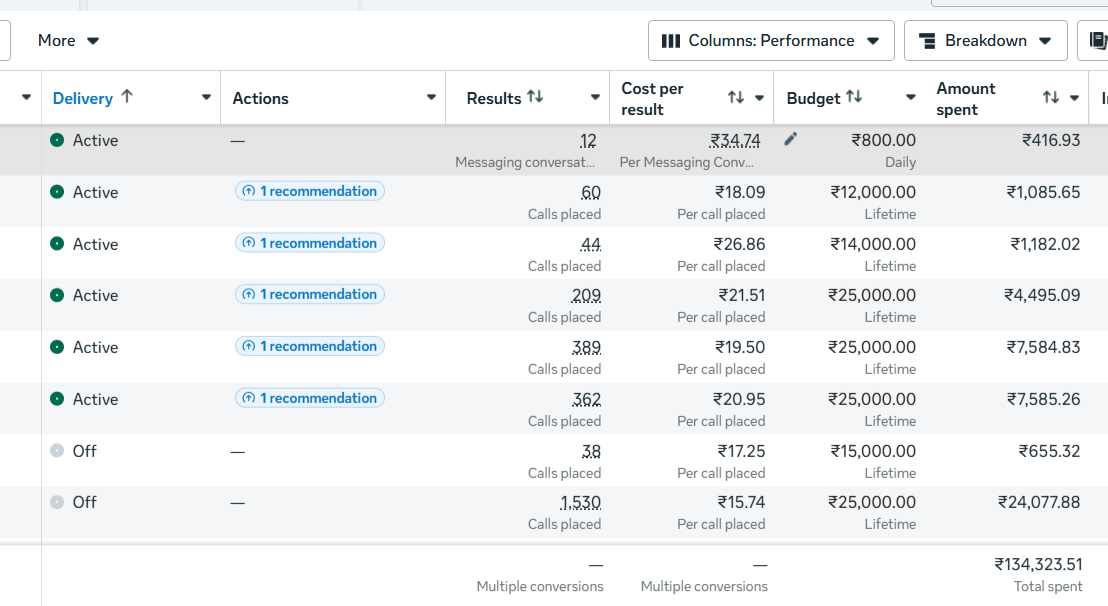
DigiflyX provides support around Meta Ads strategy, performance marketing, lead generation, creative testing, WhatsApp lead journeys, reporting and campaign optimization. The approach can connect advertising with the clinic’s real geography, lead qualification and follow-up process. Review DigiflyX’s existing performance marketing services, Meta campaign results and pricing options before starting a conversation.
LET’S TALK
Planning Lead Generation for Your Healthcare Business?
Discuss your service, location, Meta Ads funnel, qualification process and appointment follow-up with DigiflyX.
Campaign performance and lead quality vary by service, geography, competition, budget, compliance requirements and follow-up. No patient, medical or business outcome is guaranteed.
Frequently Asked Questions
How can doctors generate more qualified leads?
Doctors can generate more qualified leads by promoting one clear consultation service, targeting a realistic service area, using factual trust-focused creative, asking a few practical questions and connecting every enquiry to organised appointment follow-up and tracking.
Do Meta Ads work for doctors and clinics?
Meta Ads can create relevant awareness and consultation enquiries for doctors and clinics when the offer, geography, creative, lead route and follow-up fit the practice. Results vary, and Meta Ads do not guarantee appointments, patients or revenue.
What is healthcare lead generation?
Healthcare lead generation is the process of helping an interested person discover a healthcare service and take a measurable next step, such as submitting an enquiry, starting a conversation or requesting an appointment.
What makes a healthcare lead qualified?
A qualified healthcare lead is contactable, interested in a service the clinic provides, within a serviceable location and willing to discuss an appropriate appointment step. Qualification is not a diagnosis or a guarantee of patient conversion.
Are Facebook Ads effective for clinics?
Facebook Ads can be effective for clinic education, local awareness and enquiry generation when the clinic uses responsible messaging and measures qualified outcomes. Facebook and Instagram placements should be tested using actual lead quality rather than assumptions.
Should clinics use WhatsApp or Meta lead forms?
WhatsApp suits clinics that can manage prompt conversations, while Meta Instant Forms provide structured in-platform capture. A landing or booking page may suit services requiring more detail. Compare routes using qualified leads and appointment outcomes.
How can clinics reduce low-quality leads?
Clarify the promoted service, tighten geography to serviceable areas, use authentic clinic context, add proportionate qualification questions, improve follow-up and send disqualification reasons back to the campaign team for optimization.
What metrics should doctors track in lead-generation campaigns?
Track total and qualified leads, CPL, cost per qualified lead, contact rate, lead-to-appointment rate, appointment booking rate, show rate and cost per appointment. Use downstream conversion only where it can be measured appropriately.
How much should a clinic spend on Meta Ads?
There is no universal budget. A sensible test depends on the service, geography, competition, treatment economics, funnel, expected lead quality and campaign maturity. The clinic should also budget for suitable creative, follow-up capacity and measurement.
What should healthcare advertisers avoid on Meta Ads?
Avoid guaranteed outcomes, unsupported cure claims, fear or shame, sensitive-health assumptions, misleading before-and-after content, fabricated testimonials, unverified credentials and unnecessary collection of private medical information.